Detect Threats Faster. Across Every System
Threat intelligence and security analysis help teams understand threats across connected enterprise, cloud, and operational systems.
Threat intelligence and security analysis help teams understand threats across connected enterprise, cloud, and operational systems.
Modern threats don't stay in one lane. Attackers move between IT networks, cloud platforms, and operational technology probing, escalating, and exploiting the gaps between systems that were never designed to talk to each other. Traditional monitoring watches one domain at a time, missing the signals that only make sense when correlated across IT, OT, sensors, and edge systems. Real defense means visibility across every layer digital and physical with the speed to detect, correlate, and respond before disruption spreads.

Delayed detection can give attackers time to move across systems. Threat hunting and investigation can help teams identify suspicious activity and prioritize response.
Not all threats comes from outside. Malicious insiders or compromised credentials can bypass perimeter defenses entirely. Without behavioral monitoring, these threats goes completely unnoticed making them dangerous .

Ransomware can disrupt operations and expose sensitive data. Detection, response planning and recovery preparation help organizations address these risks.
We extend threat monitoring into industrial and operational environments correlating signals across SCADA, sensors, and telemetry with IT threat data to close the visibility gap attackers exploit at the IT/OT boundary.
Prioritizing and investigating alerts helps analysts focus on the signals relevant to their environment.
A machine-speed threat framework that ingests every signal and detects what humans miss.
Relevant security signals can be collected and normalized based on the agreed engagement scope and available data sources.
Detection approaches may combine relevant security telemetry, analytics and analyst review, depending on a client’s environment and chosen tools.
Analysts can review, prioritize and enrich alerts with relevant context and ATT&CK mappings.
Response actions should be selected with the client, reviewed by authorized personnel, and coordinated with system owners.
Security teams can use investigation findings to improve detection logic, response processes and defensive controls.
We help organizations review security signals and develop approaches for detecting suspicious activity in scoped environments.
We help organizations review security signals and develop approaches for detecting suspicious activity in scoped environments.
We continuously monitor and correlate events across IT, OT, and edge environments, including sensors, SCADA telemetry, and industrial network traffic. By connecting these data sources, we detect threats that may go unnoticed in isolated systems. This provides a unified view of operational risk and enabling faster investigation.
We support incident investigation and response planning within the scope agreed with the client.
AI-powered attacks don't discriminate by sector. They target whoever has the most to lose and exploit whoever is least prepared to respond.
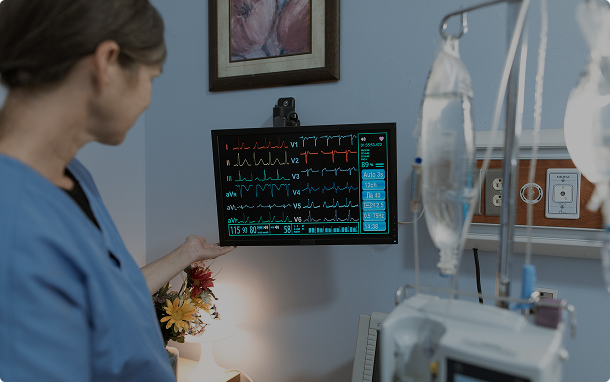
Hospitals and clinics are the number one target for ransomware attacks, a single breach can shut down critical systems and put live at risk.
Financial organizations benefit from security monitoring and effective investigation workflows.

Enterprise and industrial organizations can use relevant threat intelligence and monitoring to identify and prioritize risks to sensitive systems and operations.

Power grids, water systems, and energy infrastructure are under constant attack from sophisticated threat actors. A successful breach doesn't cost money but disrupt entire communities.

A cyberattack on your production floor can halt operations within minutes, costing millions per hour in a downtime. Early threat detection keeps SOC running and intact.

Adversaries don't just attack your models they poison your data, hijack your inference endpoints, and exploit your pipelines. Let's close the gaps before they do.